
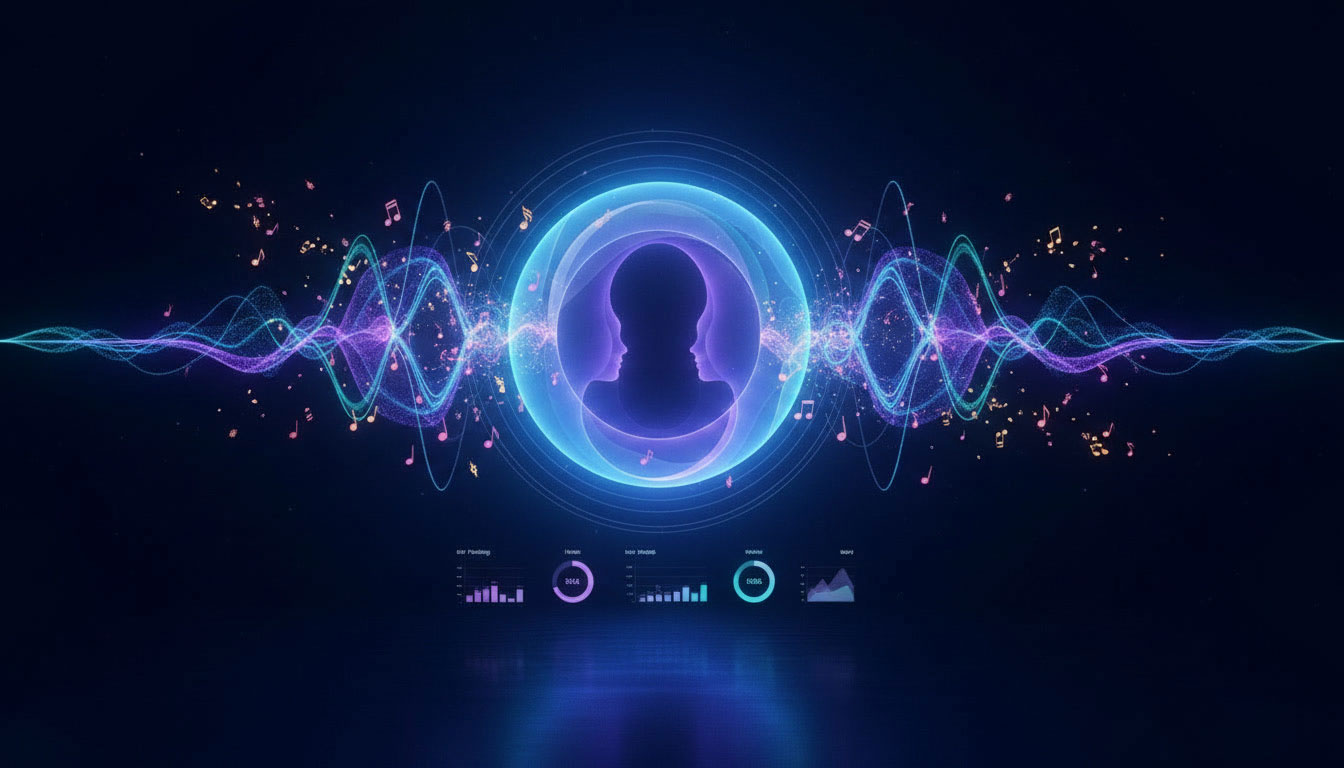
The Brain’s Journey Through a Listening Arc: Why Intentional Sound Beats the Background Shuffle
Imagine your brain as a traveler moving through a landscape of sound. When the journey is mapped—Arrival, Grounding, Release, Deep Flow—the mind settles into a rhythm that passive background music simply can’t provide.
From Random Shuffle to Curated Arc
Most streaming services offer an endless stream of tracks that blend into a uniform hum. Neuroscience shows that this “ambient” mode keeps the auditory cortex in a low‑level, habituated state, offering little novelty and minimal engagement of the brain’s predictive coding system.
Mirrora’s arcs, however, are designed with temporal scaffolding. Each phase introduces a distinct sonic texture and tempo, prompting the brain to constantly update its expectations. This dynamic engages the hippocampus (memory formation) and the prefrontal cortex (attention regulation), creating a more vivid neural imprint.
Try this: Begin your next session with the Arrival arc, notice the subtle rise in heart‑rate variability, then transition into Grounding. Record the shift in your mood tracker.
Neural Mechanics of the Four Arcs
The arcs mirror the brain’s natural oscillatory cycles:
- Arrival: A gentle crescendo activates the ventral tegmental area, releasing dopamine that primes curiosity.
- Grounding: Slow, resonant tones synchronize with alpha waves (8‑12 Hz), encouraging calm and reducing amygdala reactivity.
- Release: Rhythmic percussion invites beta activity, supporting emotional expression and processing.
- Deep Flow: Sparse instrumentation aligns with theta rhythms (4‑7 Hz), facilitating insight and creative integration.
By moving through these stages, listeners experience a micro‑journey that mirrors the brain’s own ebb and flow, strengthening neural pathways associated with self‑regulation.
How to Turn the Arc Into a Habit
- Schedule a 10‑minute slot at the same time each day—consistency trains circadian cues.
- Start with the Arrival arc on Mirrora’s curated music page to set intention.
- After each arc, jot a one‑sentence reflection in your private dashboard; the act of writing solidifies the neural trace.
- Close the session with a brief paint‑therapy doodle, letting the sound‑induced emotions flow onto the canvas.
“When sound is structured, the brain listens with purpose, not just background noise.”
Artist Stories: Crafting Arcs With Intention
Our partner musicians, like ambient guitarist Lena Vale, compose each arc on a single instrument, ensuring tonal continuity. In an interview, she explains how she maps the arc’s emotional curve onto her chord progressions, creating a sonic narrative that the brain can follow like a story.
These human‑crafted recordings differ from algorithm‑generated playlists, which lack the intentional rise‑and‑fall that guides neural oscillations.
Note: Structured listening works best when paired with mindful attention—avoid multitasking, and treat the session as a brief meditation.
Mirrora is wellness, not medical care. If you are in crisis, contact local emergency services or a licensed professional.
Ready to give your brain a purposeful soundtrack?